
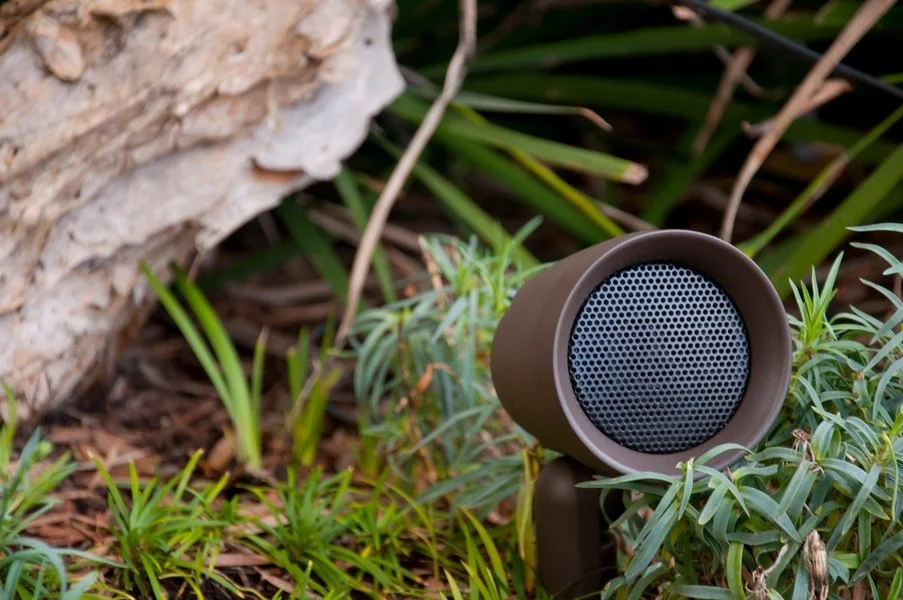
Sonance landscape speakers bring clear, evenly distributed audio to patios, pools, gardens, lawns, and outdoor gathering areas. The appropriate system depends on the size of the listening area, the layout of the property, the desired level of coverage, and the way the space is used.
As a Sonance authorized dealer and installer, Blue Hour Lighting designs outdoor audio systems around those site-specific considerations. A speaker plan may serve a single terrace, a pool and garden area, or a larger property with multiple outdoor living spaces and long cable runs.
This guide explains the Sonance outdoor speaker series, the role of satellite speakers and buried subwoofers, how coverage is planned, and the factors that shape the scope of a professionally installed outdoor sound system.
How Sonance Outdoor Speakers Are Built
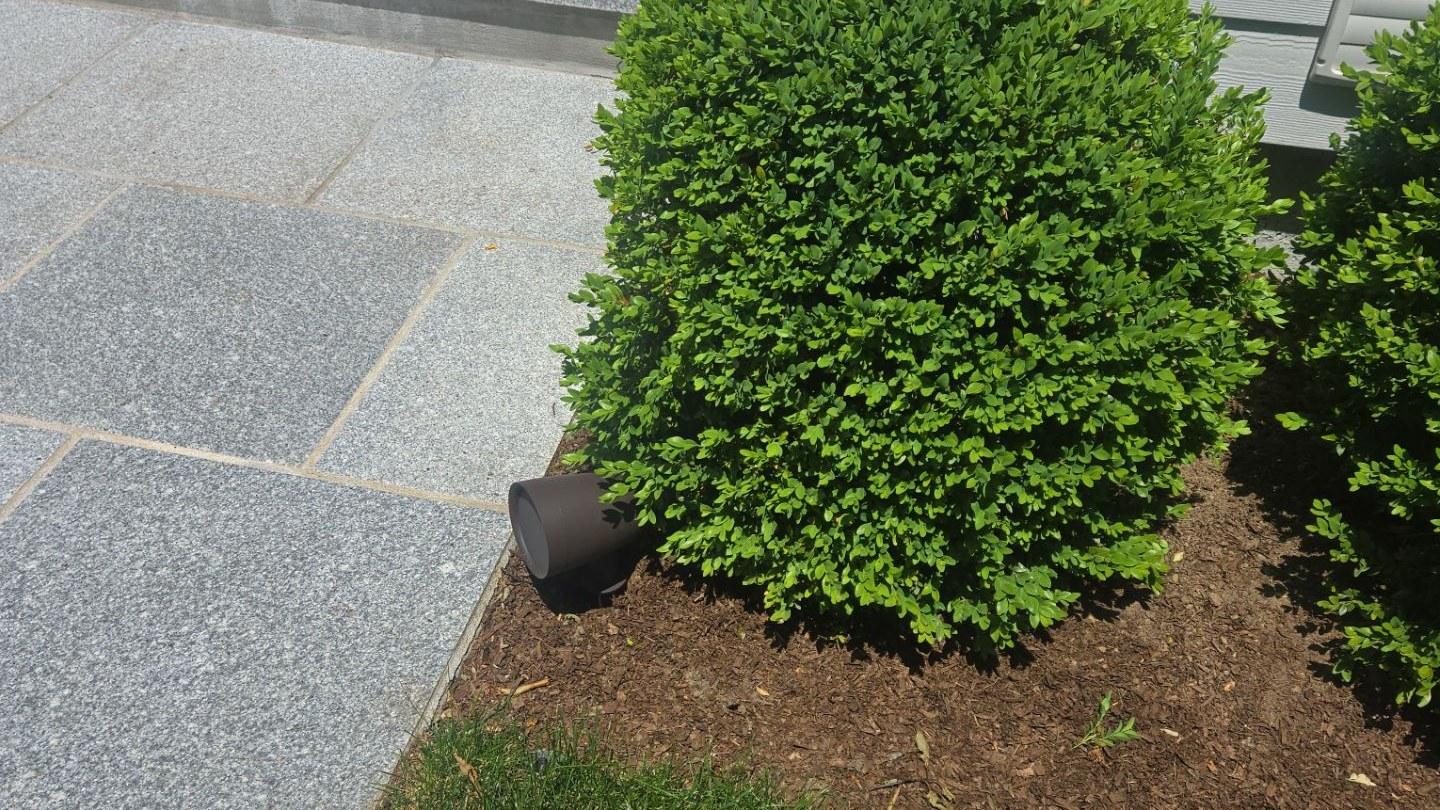
Sonance landscape speaker systems use a distributed-audio approach built for the elements. Small satellite speakers are positioned throughout planting beds and other discreet areas of the landscape. A subwoofer is installed below grade, typically with only a vent cap visible at the surface.
The satellite speakers carry vocals, instruments, and high-frequency detail. The buried subwoofer provides lower frequencies and depth. Together, the components create a full sound field across the property.
Speaker placement is central to the experience. Multiple satellite speakers can be located around the areas where people gather and move, allowing music to be heard evenly across the space at comfortable listening levels. The system can support conversation, dining, entertaining, or quiet time outdoors while keeping the sound present throughout the landscape.
A considered layout also gives the outdoor audio system a more natural relationship to the property. Music seems to emerge from the landscape as a whole, with speaker locations planned around patios, planting beds, pool areas, walkways, and other outdoor features.
Choosing the Right Sonance Series
Sonance offers several landscape speaker systems designed for different property sizes and listening areas. The Patio Series, Garden Series, and Landscape Series each use the same underlying approach: distributed satellite speakers, a buried subwoofer, and amplification selected for the planned coverage area.
Patio Series: Small Zones
The Sonance Patio Series is well suited to a focused outdoor area, such as a fire pit, hot tub, terrace, or smaller patio. The Patio 4.1 system includes four staked satellite speakers and one buried subwoofer. With a single amplifier, it can cover approximately 1,000 square feet.
A larger amplifier can support up to eight satellites and a second subwoofer when the design calls for broader coverage within the same general outdoor area.
Specs: 3.5-inch aluminum satellites with Santoprene surrounds, 8-inch dual-voice-coil subwoofer, and Sonance SR 2-125 DSP amplifier.
Garden Series: Most Residential Yards
The Sonance Garden Series is a versatile landscape speaker system for many residential properties. The SGS 8.1 system pairs eight satellite speakers with a buried subwoofer and can cover up to 3,500 square feet.
This configuration can serve a backyard that includes a patio, pool, lawn, planting beds, and adjacent gathering areas. The Garden Series can also expand when the property or listening plan calls for additional coverage.
Specs: 3.5-inch aluminum satellites with 0.75-inch polyurethane dome tweeters, impedance matched at 8 ohms for use with one two-channel amplifier, 10-inch dual-voice-coil subwoofer, expandable to 16.2.
Landscape Series: Estates and Long Runs
The Sonance Landscape Series is designed for larger properties, extensive outdoor living areas, and projects where speaker locations sit at significant distances from the audio equipment.
This series uses commercial-grade 70V/100V audio distribution, which supports longer cable runs and broader system scale. It includes larger satellite speaker options, several subwoofer configurations, and a hardscape subwoofer designed for integration within built landscape features. The equipment is rated for year-round outdoor use.
Specs: LS4T satellites with 4.5-inch woofers, LS6T satellites with 6.5-inch woofers, LS12T, LS15T, and HS12T subwoofers, IP66-rated components, PowerZone Connect amplification, and a 20 Hz to 55 Hz frequency range.
Here is a useful starting point when comparing the three Sonance landscape speaker series:
- Patio Series: Designed for a focused outdoor area, such as a patio, fire pit, or spa area.
- Garden Series: Designed for a typical residential backyard with several connected gathering areas.
- Landscape Series: Designed for larger properties, long cable runs, multiple zones, and more extensive outdoor audio coverage.
Why 70V Matters for Large Properties
Traditional speaker wiring can serve smaller outdoor audio systems effectively. As the distance between an amplifier and its speakers grows, cable length becomes a more important part of the design.
A 70V/100V system distributes audio at a higher voltage, allowing the signal to travel greater distances efficiently. Each speaker uses a transformer that adjusts the signal to the appropriate operating level. This configuration supports consistent coverage across larger properties and gives the system greater flexibility for future additions.
The Sonance Landscape Series uses this approach to serve larger outdoor environments, including properties with distant gardens, long driveways, separate pool areas, guest spaces, outbuildings, and multiple gathering zones.
Speaker layouts require proper planning and setup. Blue Hour Lighting plans the system around the intended coverage, amplifier capacity, speaker count, cable routes, and the property’s long-term plans. A properly scoped 70V system can also accommodate future speaker additions when the original design includes the necessary capacity.
Speaker Count and Placement
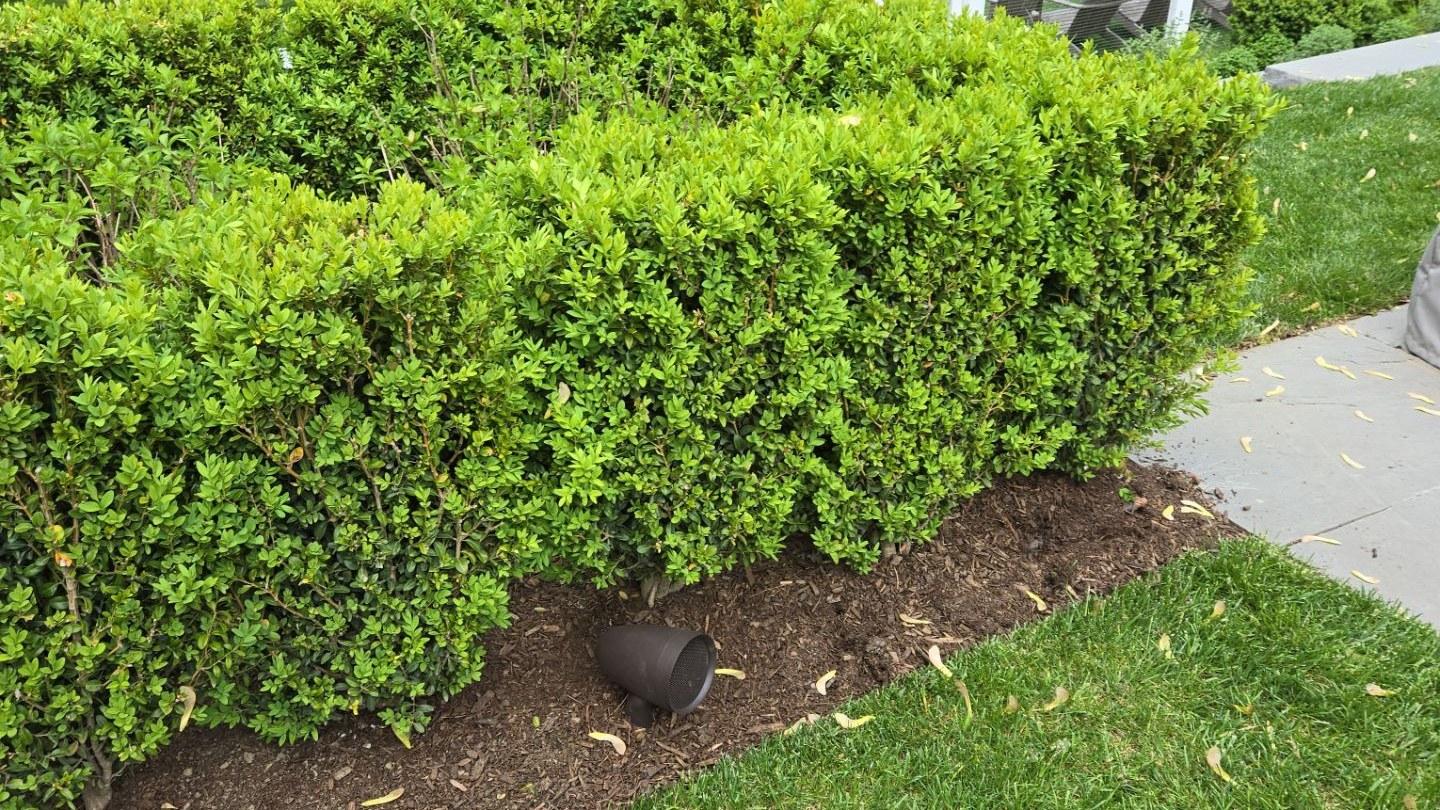
Speaker count and placement shape the way an outdoor audio system feels. Outdoor sound moves freely through open space, so coverage is created through a series of strategically positioned satellite speakers.
For many projects, satellites are spaced approximately 10 to 30 feet apart along the areas where people spend time and move through the property. The final spacing depends on the speaker series, site conditions, planting layout, terrain, desired listening level, and proximity to neighboring properties.
A distributed layout allows each speaker to contribute to the overall sound field at a moderate level. This creates a more even listening experience across the patio, lawn, pool area, garden, or entertaining space.
Speaker locations are selected with both acoustics and appearance in mind. Satellite speakers can be integrated into planting beds and positioned at an appropriate height within the landscape. Their direction can be adjusted toward primary living areas, supporting clear music coverage while helping manage the sound that reaches surrounding properties.
What Determines the Price
Blue Hour Lighting prepares each outdoor audio proposal around the conditions of the property and the scope of the proposed system. The final investment reflects the equipment, installation requirements, and design decisions involved.
Key considerations include:
- Zone count. Each independently controlled area requires appropriate amplifier channels, control capability, and system planning.
- Wire run length. The distance from the amplifier to each speaker affects cable requirements, routing, and installation labor. Driveway crossings, patios, masonry, and other built features can also shape the installation approach.
- Trenching conditions. Open lawn areas, established planting beds, mature root systems, irrigation components, and existing hardscape each require different levels of planning and site work.
- Amplifier tier. A compact two-channel amplifier and a multi-zone PowerZone Connect system support different system sizes, control options, and speaker layouts.
- Coordinated lighting installation. When landscape lighting and outdoor audio are installed during the same project, trenching and site coordination can be planned together. This approach can simplify the installation sequence and reduce disturbance to finished landscape areas.
Planning lighting and audio together also allows fixture locations, speaker locations, wire routes, transformers, amplifier equipment, and controls to be considered as one coordinated outdoor system.
Getting the Layout Specified Properly
Sonance coverage ratings provide a useful starting point. Each property, however, presents its own conditions. Slopes, hedges, mature plantings, pools, outbuildings, equipment locations, patios, driveways, property lines, and gathering areas all influence speaker placement and coverage.
Blue Hour Lighting begins with an on-site walkthrough to understand how the outdoor space is used. The team identifies primary entertaining areas, quieter seating areas, circulation paths, pool zones, and the locations where sound will have the greatest value.
Speaker positions can then be planned alongside landscape lighting, planting beds, hardscape, and other property features. The resulting speaker plan gives the homeowner a clear view of the proposed layout before work begins.
Blue Hour Lighting installs Sonance outdoor speakers across Putnam, Westchester, Dutchess, and Rockland counties in New York, as well as Greenwich, Connecticut.
Learn more about outdoor sound system design and installation. For additional planning guidance, explore the Outdoor Speaker Placement guide and In-Ground Subwoofers Explained. To discuss a Sonance landscape speaker system for your property, request a free consultation.