
Professional Landscape Lighting Installation
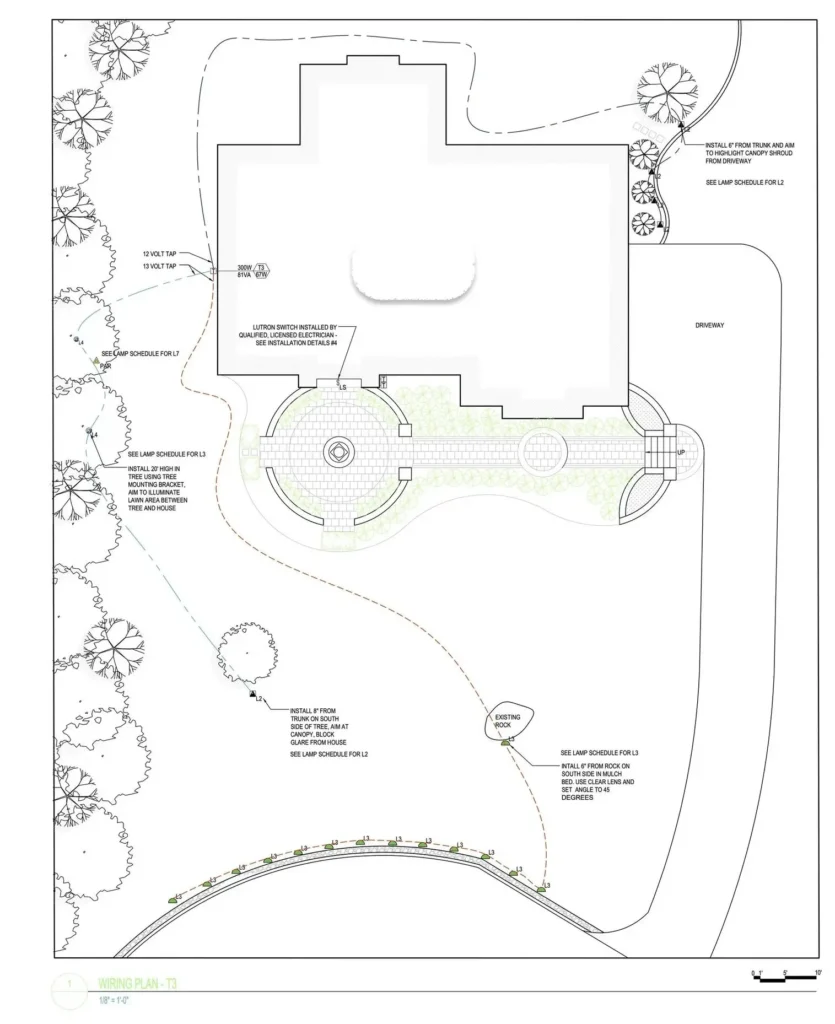
A well-designed lighting system begins with a clear plan. Before fixtures are ordered or installation begins, Blue Hour Lighting prepares a detailed lighting plan tailored to your property. On it, you can see each fixture’s location, aiming direction, wattage, cable route, and transformer location so the full design can be reviewed in advance.
Blue Hour Lighting designs and installs low-voltage landscape lighting throughout Putnam, Westchester, Dutchess, and Rockland counties in New York, as well as Greenwich, Connecticut. From the first walkthrough through final aiming, each phase is planned to support the architecture, landscape, and practical use of the property after dark.
What a Landscape Lighting Design Includes
The design process begins on site. Jarod walks the property with the homeowner, noting how the outdoor areas are used, which entrances and paths require attention, and which architectural and landscape elements should be visible after sunset.
That conversation establishes the priorities for the project before fixture types, placement, or wiring are determined. The resulting plan provides a clear view of the proposed system, including:
- Every fixture location and aiming direction
- Fixture type and wattage at each location
- Transformer locations and cable paths
- The number of lighting zones needed to support the design
The plan is reviewed and approved before materials are ordered or anything is installed.
The Installation Process, Step by Step
A professional landscape lighting installation follows a deliberate sequence. Planning the system first allows the crew to work efficiently while protecting the finished landscape and coordinating with the property’s existing features.
Layout
The approved plan is reviewed before installation begins. Fixture locations, equipment selections, and lighting zones are confirmed before materials are placed on the property.
Trenching
Low-voltage cable is installed in trenches, generally about six inches deep, with wire routes planned around irrigation lines, established planting beds, and major root zones.
Transformer mounting
Transformers are mounted on the home or on an appropriate post near an exterior outlet. They are positioned above anticipated snow levels and placed to serve the lighting zones efficiently.
Cable pulls and connections
Cable is routed to each zone and connected with outdoor-rated waterproof wire connectors designed for long-term exposure.
Light installation
Each landscape light is staked, mounted, recessed, or otherwise installed according to the approved design and the conditions of the site.
Aiming and fine-tuning
Once the system is operating, fixtures are aimed and tested so individual elements work together as a complete nighttime composition.
Keeping Low Voltage Bright
Most residential landscape lights operate on low voltage, typically about 12 volts beyond the transformer. This makes the system adaptable over time. Fixtures can be added later when the original design and electrical capacity allow for expansion, and repairs to a damaged cable are generally more straightforward than repairs to line-voltage wiring.
Low voltage systems do, however, require careful planning. Power diminishes over distance, particularly when cable runs are long or loads are not balanced properly. Without appropriate transformer sizing, wire selection, and circuit design, fixtures farther from the transformer may appear dimmer, shift in color, or experience reduced service life.
Those considerations are addressed before the first fixture is installed.
Transformers, Wire & Voltage Drop
Voltage drop is one of the central technical considerations in a low-voltage landscape lighting installation. It occurs when electrical current travels through cable over distance and the voltage available at the far end of the run is reduced.
Modern LED fixtures are more tolerant of voltage variation than older halogen systems, but a poorly designed circuit can still affect light output, color consistency, and fixture longevity. Blue Hour Lighting accounts for total wattage, cable length, fixture placement, and circuit layout as part of the design process.
Transformer Capacity
Transformer capacity is determined by the planned load of the system. The load must be kept under approximately 80 percent of a transformer’s rating to provide appropriate operating capacity and reduce unnecessary strain on the equipment.
Larger properties may require multiple transformers positioned near the areas they serve. This reduces long cable runs and allows individual zones to perform more consistently.
Wire Gauge
Blue Hour Lighting uses direct-burial low voltage wire, beginning with 12-gauge and specifying heavier cable where distance and load require it. Cable gauge is selected in relation to the design, not simply to reduce material cost.
Undersized copper wire is a common issue in systems that require repair or replacement. A properly specified wire run helps ensure that fixtures receive suitable voltage throughout the system.
Circuit Layout
The way fixtures are grouped and connected affects both voltage distribution and long-term performance. Depending on the layout of the property, Blue Hour Lighting may use a hub layout, loop, T split, or another circuit configuration suited to the fixture locations and planned load.
Connections Matter
Every connection is a potential point of failure if it is not protected from moisture and seasonal conditions. Blue Hour Lighting uses waterproof, gel-filled, or heat-shrink connectors designed for outdoor use. Proper connectors and careful installation help protect the system through changing weather conditions.
Your Yard After Landscape Lighting Installation
Landscape lighting installation requires more than placing fixtures and burying wire. The work must respect the landscape, masonry, and plantings already in place that give your property its character.
Blue Hour Lighting opens narrow trenches and cuts and replaces sod carefully. Established planting beds are worked by hand, and mature trees are given appropriate clearance to avoid disturbing major roots.
Hardscape requires its own level of coordination. When a patio, driveway, wall, or other masonry feature is still under construction, Blue Hour Lighting can coordinate sleeves for future wiring before the work is completed. On existing hardscape, the team can core drill for recessed fixtures or route wiring through masonry joints where appropriate.
These methods require additional planning and labor, but they allow the lighting system to be integrated into the property properly.
Fixture Types and Where We Install Landscape Lighting
Most landscape lighting designs combine several techniques. A typical property may utilize several approaches, selected according to the architecture, landscape composition, circulation paths, and the way each outdoor area is used in the evening.
Uplighting and Accent Lighting
Uplighting and accent lighting are often placed at the base of trees, walls, architectural details, or focal planting areas. The fixture is positioned so attention remains on the illuminated element rather than the light source itself.
Uplighting adds depth, structure, and visual interest to the outdoor space after dark.
Path and Walkway Lighting
Path and walkway lighting provides a clear, comfortable route through the property while maintaining a composed appearance. Fixtures are spaced so pools of light overlap gently and to avoid the common mistake of placing them all on one side. The goal is guidance and definition, not to create a runway.
Downlighting and Moonlighting
Downlighting, often called moonlighting, places fixtures above the ground and directs light through branches or from elevated architectural locations. This technique can create a softer, more natural effect on lawns, paths, patios, and planting beds.
Fixture placement and aiming are particularly important with downlighting so the source remains as discreet as possible and glare is controlled.
Grazing
Grazing places a fixture close to a wall or textured surface so the beam travels across it. This can bring out the texture and character of stone, brick, masonry, or other architectural materials.
The effectiveness of grazing depends on precise distance, aiming, beam spread, and fixture concealment.
Facade and Front Lawn Lighting
Facade and front lawn lighting give the front of the property greater definition after sunset. A balanced design can draw attention to the entry, rooflines, stonework, trees, and other features without flattening the architecture or over-lighting the landscape.
The front door may serve as a focal point, while lighting throughout the lawn and planting areas gives the overall composition greater depth.
Step and Safety Lighting
Steps, grade changes, pool edges, transitions between outdoor areas, and other potential hazards are addressed as part of the lighting design. The appropriate fixture is selected according to the condition, material, and degree of illumination needed for safe movement through the property.
Note: Our security work is lighting-based only. We do not install, supply, or service security cameras or surveillance equipment.
Hardscape Lighting
Hardscape lighting is integrated into steps, walls, pillars, patios, and other built features of the property. When properly planned, the fixture remains discreet and the illumination becomes part of the finished hardscape design.
See hardscape lighting for examples and more detail about this work.
Fixture Brands, Materials, and Color Temperature
Blue Hour Lighting installs fixtures from Kichler, CAST Lighting, FX Luminaire, Brilliance LED, Auroralight, Unique Lighting Systems, and Infinity Lighting. These manufacturers offer products designed for outdoor conditions and long-term landscape lighting applications.
Material selection matters. Brass, copper, and stainless steel fixtures generally cost more initially than cast aluminum, but they offer greater resistance to weather and can provide a longer service life. Many carry lifetime factory warranties, depending on the product and manufacturer.
Color temperature is equally important to the finished design. Blue Hour Lighting generally specifies warmer lighting because it complements planting, stone, wood, and warm-toned exterior materials.
When a Licensed Electrician is Necessary
For the low-voltage portion of a landscape lighting system, a licensed electrician is generally not required. The fixtures, cable, and connections beyond the transformer operate at approximately 12 volts.
The transformer must connect to a proper exterior GFCI-protected circuit. If a suitable outlet is already available at the planned transformer location, Blue Hour Lighting can mount the transformer and complete the low-voltage installation. If a protected outlet must be added, Blue Hour Lighting can provide the proper outlet as part of the project.
Low-Voltage Landscape Lighting Maintenance
Landscape lighting is exposed to weather, seasonal growth, changing soil conditions, irrigation, and normal outdoor wear. Ongoing maintenance helps preserve the appearance and function of the original design.
During maintenance visits, Blue Hour Lighting can:
Adjust fixture placement and aiming as the landscape grows
Clean lenses and inspect fixture condition
Replace failed lamps
Repair wiring and connections as needed
Reset timers and controls
Check transformer load and system performance
Regular service allows the lighting design to evolve with the property while helping the system continue to perform as intended.
The Cost of Outdoor Lighting Installation
The cost of outdoor lighting installation depends on the design, the conditions of the property, and the equipment required to achieve the planned result. A focused front-facade and walkway design requires a different scope of work than a complete lighting system for a larger property.
Several factors influence the final investment:
How much of the yard is being lit
A lighting plan for a front entry and primary walkway is more narrowly scoped than one that includes the full property, pool areas, gardens, outbuildings, long driveways, and multiple outdoor living spaces.
Fixture count and placement
Fixture quantity is one consideration, but distance, access, mounting conditions, and the placement of each fixture also affect the installation scope.
Transformer capacity
The electrical load and the distance between transformers and fixtures determine how many transformers are needed and where they should be located.
Wire length
Longer runs may require heavier-gauge cable, additional routing work, or multiple transformers to maintain appropriate voltage at each fixture.
Material grade
Brass, copper, and stainless steel fixtures are priced differently from cast aluminum fixtures and are selected according to the design, the site conditions, and the desired long-term performance.
Trenching conditions
Open lawn areas are generally more straightforward than established beds, mature root systems, carefully designed plantings, and hardscape crossings, all of which require added care during installation.
Zoning
Independently controlled lighting areas require additional planning, equipment, and power capacity.
The most reliable way to determine the cost of a proposed system is through a free on-site assessment and a detailed lighting plan.
Landscape Lighting Across Westchester and the Hudson Valley
We provide professional landscape lighting installation throughout Westchester County, Dutchess County, Rockland County, and Greenwich, Connecticut. We hold the licenses required in Westchester and Rockland Counties and in Connecticut.
To discuss a lighting project, request a free consultation, or call 845-202-3369 to arrange an on-site walkthrough.
Landscape Lighting Installation FAQ
Is professional landscape lighting worth it?
The answer depends on the scope and purpose of the project. A simple light at an entry can be addressed with a store-bought fixture or DIY kit. A professionally designed landscape lighting system is intended to address the property more comprehensively.
Professional landscape lighting installation includes a carefully designed plan, appropriately specified equipment, carefully planned wire routes, reliable outdoor connections, and fixture placement that considers architecture, planting, circulation, and glare. It can also improve visibility at steps, grade changes, and other outdoor areas used after dark, providing another layer of safety and security.
Do you need an electrician to install landscape lighting?
A licensed electrician is generally not required for the 12-volt side of a low-voltage landscape lighting installation. The fixtures, cable, and connections beyond the transformer are low-voltage components.
A licensed electrician is needed if a new exterior GFCI-protected circuit must be installed for the transformer. Many homes already have a suitable outlet in the appropriate location. Where one is not available, Blue Hour Lighting can provide the protected outlet as part of the project.
Is it difficult to install landscape lighting?
Installing an individual fixture is relatively straightforward. Installing landscape lighting as an entire system requires more technical planning and design judgment.
Transformer capacity, wire gauge, voltage drop, circuit layout, waterproof connections, fixture selection, and aiming must all work together. The visual side of the process also matters. Knowing where to place light, where to preserve shadow, how to conceal the source, and how to manage glare is what gives a finished system depth and coherence.