
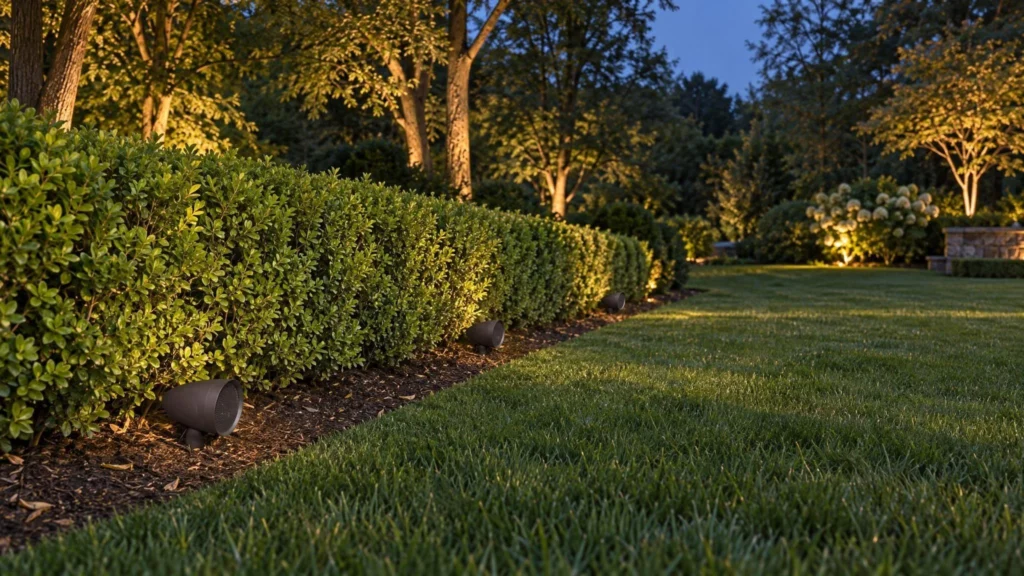
Blue Hour Lighting plans outdoor audio systems around the shape of the property, the way its spaces are used, and the areas where sound matters most. From there, we decide how many speakers the yard needs, where to place each one, and how to aim the satellites so the music sounds even at a natural volume. This guide explains how a layout is planned and what goes into placing each speaker.
Spreading Sound Across the Yard
Two speakers on the back of the house can sound clear on the patio, but the music fades toward the far end of the yard. Turning them up to fill the whole yard makes the patio too loud for conversation. With too few speakers covering a large area at high volume, outdoor audio can also start to sound distorted. Spreading several speakers across the property, each at a moderate volume, keeps the music more even from the terrace to the edge of the lawn.
Slopes, Hedges & Hard Surfaces
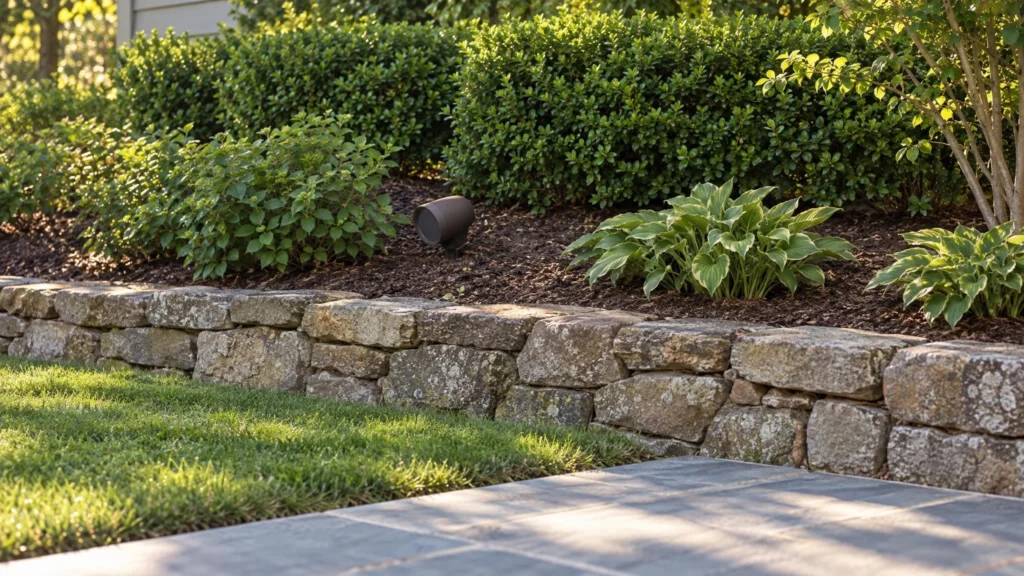
Three features of the yard often affect where the satellites are placed:
- Slopes and grade changes. Sound travels differently when the speaker is higher or lower than the listening area, so satellite positions and aiming are adjusted to follow the terrain.
- Hedges and dense plantings. Established hedges and dense shrubs absorb some of the sound, so satellites are placed with a clear line to the seating and paths nearby.
- Hard surfaces. Satellites are set a short distance back from stone patios, retaining walls, and masonry facades, then aimed toward the listening area.
The Stages of Planning an Outdoor Speaker Layout
We plan every home’s speaker layout in five stages, from the first walk of the property to the finished plan.
1. Walking the Property
On the first visit, a dedicated professional walks the yard with the homeowner to see where people gather, eat, and entertain. Pool areas, covered patios, quiet seating spots, and the paths between them are noted as well. The homeowner also points out which of those spaces should have music.
2. Choosing the Zones
Next, the yard is divided into zones, each with its own volume control. A patio, a pool deck, a far garden, and an open lawn might each be a zone served by a group of speakers. Once the system is installed, the homeowner can raise or lower the music in each zone from a phone or smart device.
3. Spacing the Satellites
Within each zone, the satellites are placed near the seating areas and paths where people spend time. The spacing between them depends partly on the Sonance series. A Garden Series SGS 8.1 system, for example, can cover up to 3,500 square feet with eight satellites. For larger properties with long cable runs, the Landscape Series uses 70V/100V distribution, which supports consistent coverage out to distant gardens and pool areas. Each speaker’s position is then adjusted for the terrain, the plantings, and the distance to the property line.
4. Planning Direction & Levels
Each satellite is aimed toward the seating, path, or pool area it covers. Volume is planned zone by zone, so music on a dining patio and on an open lawn can each stay at a comfortable level. During the installation, the satellites are adjusted to even out the sound in each zone.
5. Preparing the Speaker Plan
A speaker plan and a written estimate then show the homeowner where each satellite will be placed before any work begins. Once the scope is approved and the agreement is signed, equipment is ordered and an installation date is set.
Equipment, Additions & Neighbors
Our team also plans where the amplifier and other equipment will be located and how far the cable must run to each speaker. Driveway crossings, patios, and stone walls along the way can change the cable’s route.
Blue Hour Lighting is a Sonance authorized dealer and installer, with hands-on experience in the design and setup of outdoor audio systems. That experience guides the speaker count we recommend for each property and the series that fits it. The layout also accounts for:
- Later additions. Speakers for a new terrace or side yard can join the system in a second phase when the original design includes the necessary capacity.
- Nearby homes. Aiming and output levels are planned so the music fills the patios, lawns, and gardens it is meant for, with less of it carrying past the property line.
- Audio and landscape lighting coordinated as one project. When outdoor sound and lighting are installed together, the cable routes and equipment locations are planned at the same time, and the ground can be broken once for both. That can mean less disturbance to finished lawns and planting beds.
Blue Hour Lighting installs outdoor sound systems across Westchester County and the surrounding counties in New York, as well as Greenwich and portions of Connecticut. Our audio projects follow the same installation stages as our landscape lighting work.
Service Areas in New York & Connecticut
Blue Hour Lighting is based in upstate New York and serves residential and commercial clients throughout four New York counties and portions of Connecticut.
- Westchester County, NY, including
- Dutchess County, NY
- Putnam County, NY
- Rockland County, NY
- Litchfield County, CT
- Western New Haven County, CT
- Greenwich, CT
Ask About Outdoor Speaker Placement
Music sounds most even when the speaker count and placement are planned for the property. For homeowners, planning starts with a free on-site consultation, and the speaker plan follows that visit. To arrange one, call 845-202-3369 or email info@bluehourlighting.com, Monday through Friday, 8:30 a.m. to 4:30 p.m.
Frequently Asked Questions About Speaker Layouts
How far apart should outdoor speakers be?
For many projects, satellites are spaced approximately 10 to 30 feet apart, following the areas of the property where people sit and walk. Within that range, the exact gap comes down to the series, the ground and plantings between speakers, the listening level, and how near the neighbors are.
Will the neighbors hear an outdoor speaker system?
The system is planned to limit what the neighbors hear, with each speaker aimed toward the areas where people gather. Several speakers at a moderate level carry less sound toward nearby homes than a loud pair mounted on the house. Speakers closest to the neighbors can be angled back toward the house. With a zone of their own, they can also play more quietly than those in the middle of the yard.
What makes one outdoor speaker layout cost more than another?
The scope of every outdoor audio project reflects the homeowner’s wants and needs and the overall layout of the property. Pricing for a layout is determined by how many areas need their own volume control and how far the wire runs from the amplifier to each speaker. The ground along each route, the amplifier tier needed, and any work shared with a landscape lighting installation also affect the estimate. Blue Hour Lighting offers homeowners a free on-site consultation. During that visit, our team looks at the zones, the wire runs, and the ground the cable will cross, so the estimate is based on the property’s real conditions.