
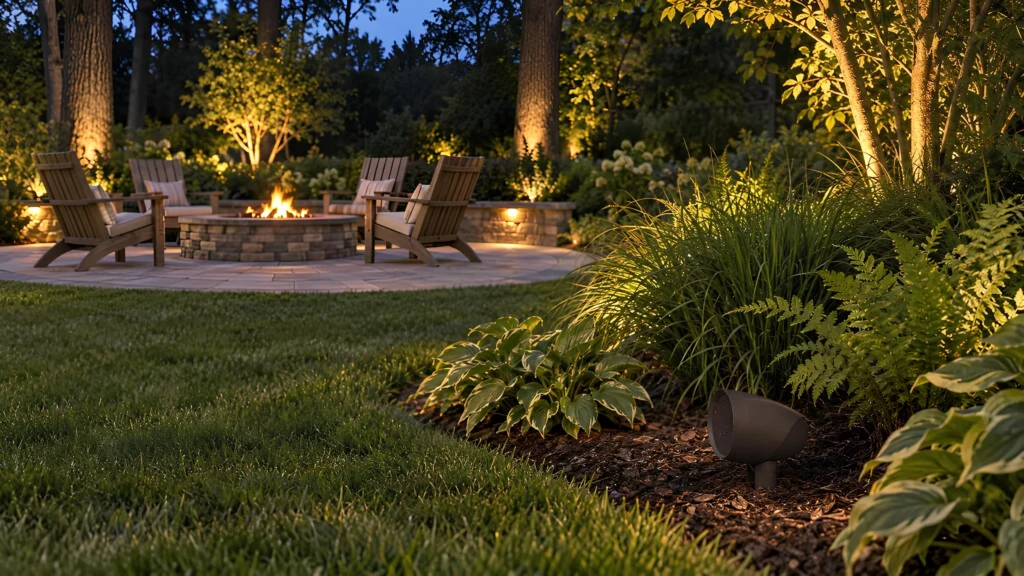
Good outdoor sound starts with a plan, well before any speakers are chosen. We look at the layout of the yard, how far the music needs to carry, and which areas should have their own volume control. This guide covers each one, along with wire routing, equipment placement, and room to add speakers later. As a Sonance authorized dealer and installer, Blue Hour Lighting helps homeowners plan every step.
The Parts of an Outdoor Sound System
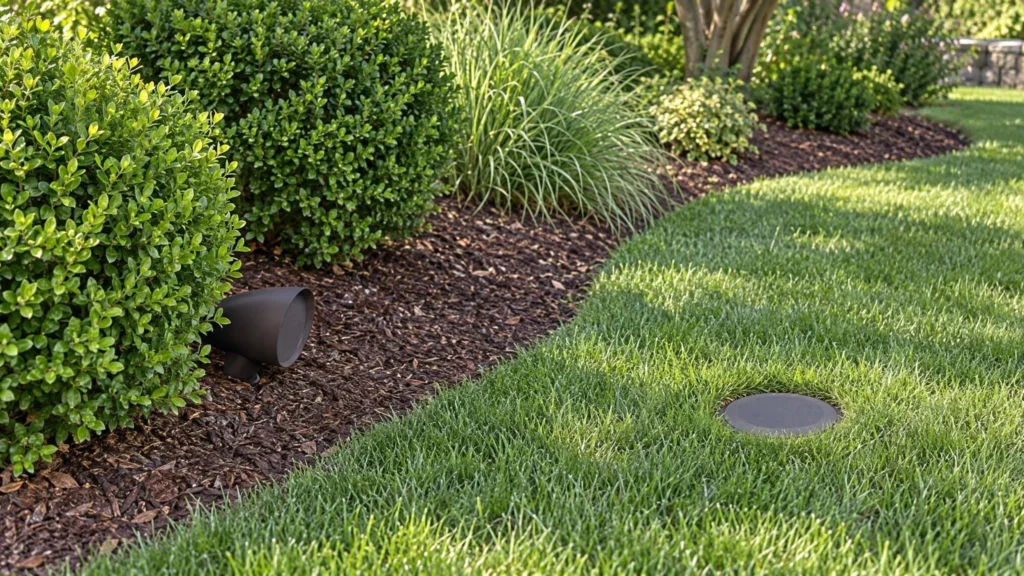
In a Sonance outdoor audio system, small satellite speakers are set in planting beds and along the edges of lawns and patios. A subwoofer is installed below grade, typically with only a vent cap visible at the surface. An amplifier powers the speakers, and buried cable connects each part of the system.
The satellites carry voices, instruments, and high-frequency detail, while the buried subwoofer handles the bass. Since the music is spread across several satellites, no single speaker has to play loudly, and conversation stays easy on the patio.
Key Planning Decisions
A dedicated professional from our team helps the homeowner plan the system in three steps.
1. Size of the Listening Area
The first step is deciding how much of the yard the music should reach. A fire pit terrace, a patio and pool area, and a full backyard with lawn and gardens each call for a different number of satellites. Larger areas may also need a second subwoofer. Sonance’s Patio 4.1 system covers about 1,000 square feet on one amplifier, and its Garden Series SGS 8.1 covers up to 3,500. For many projects, satellites are spaced approximately 10 to 30 feet apart. Their exact spacing depends on the series, the terrain, the plantings, and the distance to neighboring properties. The size of the area also affects the amplifier and the wire routes.
2. Number of Zones
An area with its own volume control is called a zone. For example, if the pool area should play music at a different volume than the dining patio, each needs separate amplifier channels and controls. The number of zones helps decide which amplifier to use. Each zone can then be adjusted from a phone or smart device.
3. Equipment & Wire Runs
Each speaker is wired back to the amplifier, and longer runs take more work to install. An open lawn is the easiest route for the cable. Planting beds, tree roots, irrigation lines, hardscape, and driveway crossings call for more careful planning. Where the amplifier is located matters too, because every run starts there. On larger properties, longer runs may need a 70V system, which carries the signal with less loss than standard wiring. Beyond the cable route, slopes, hedges, and mature plantings can also affect how speakers are placed across the property.
Room to Add More Later
A system can begin with one area and grow over time. Choosing a first amplifier with spare channels makes it easier to add speakers and zones when the homeowner is ready. The Garden Series, for example, can expand from an 8.1 to a 16.2 layout, adding satellites and a second subwoofer. A Patio 4.1 system can also grow to as many as eight satellites and two subwoofers with a larger amplifier. On a 70V system, speakers can be added later as long as the original design left enough amplifier capacity for them.
Service Areas in New York & Connecticut
Blue Hour Lighting is based in upstate New York and serves residential and commercial clients throughout four New York counties and portions of Connecticut.
- Westchester County, NY, including
- Dutchess County, NY
- Putnam County, NY
- Rockland County, NY
- Litchfield County, CT
- Western New Haven County, CT
- Greenwich, CT
Start With a Walk of Your Yard
Planning a backyard sound system begins with a free on-site consultation for homeowners. A dedicated professional from Blue Hour Lighting walks the yard with the homeowner to map out the listening areas, zones, equipment locations, and cable routes.
To schedule a visit or ask a question, call 845-202-3369 or email info@bluehourlighting.com, Monday through Friday, 8:30 a.m. to 4:30 p.m.
Frequently Asked Questions About Planning Outdoor Audio
What should be decided before buying outdoor speakers?
Our team guides the homeowner through three decisions: how much of the yard should have music, how many zones it needs, and where the equipment and cable runs will go. The speaker plan is then built around them.
Can a backyard sound system work with a smart-home platform?
Yes. Sonance audio runs through its own app and can also connect to whole-home platforms such as Control4, Savant, and Crestron, as well as Google Home, Apple Home, and Alexa. Landscape lighting uses a separate app. With both on the same platform, the lights and the music can be set to turn on together.
Should the sound system go in at the same time as landscape lighting?
Often, yes. When lighting and sound are planned together, the fixtures, speakers, and equipment can be laid out as one system from the start. Where the cables share a path, they can go in at the same time, which can mean less disruption to the yard.
How is a Sonance series chosen for a backyard?
The choice comes down to how much area the speakers need to cover and how far the cables have to run. For a typical backyard, the Garden Series is often the right fit. A single terrace or spa area may need only the Patio Series, and the longest runs on an estate call for the Landscape Series. Our team makes the final recommendation after seeing the yard in person.
Can outdoor speakers stay in the ground through the winter?
Yes. The satellites can stay in the planting beds all year, and the subwoofer remains buried. Sonance builds its Patio, Garden, and Landscape speakers to IP66, which means they are sealed against dust and heavy spray. The Landscape Series is also rated for all-weather use.
Can more speakers be added after the first install?
Yes, as long as the first system was planned with room to grow. With spare amplifier channels and extra wiring in place, new speakers can extend the original layout or cover a new zone, such as a far garden or pool area.
How much does a backyard sound system cost?
Every property requires a different scope of work based on the homeowner’s wants, needs, and the overall layout of the property. For a backyard system, the estimate is determined by how many zones it needs and how long the wire runs are. The price also reflects how much lawn, planting bed, or hardscape the cable crosses, along with the amplifier tier and any coordination with a landscape lighting project. Each homeowner’s project starts with a free on-site consultation. During the consultation, the Blue Hour Lighting team looks at the site conditions firsthand and gathers the details needed for an accurate estimate.